What Is Pavé Jewelry? Pavé Settings, CZ vs. Diamond, and How to Care for It
Pavé is one of the most popular ways to add sparkle to jewelry — and one of the most misunderstood. Is it a type of stone? A style? Is it durable enough for every day? This guide explains exactly what pavé jewelry is, how it's made, how cubic zirconia compares with diamond, and how to keep pavé pieces sparkling for years.
What does "pavé" mean?
Pavé (pronounced pah-VAY) comes from the French word for "paved." In jewelry, it describes a setting technique, not a type of stone: many small stones are set very close together so the surface looks paved with sparkle, with as little metal showing between them as possible.
The stones are held in place by tiny beads or prongs of metal raised from the piece itself. Because each stone is small and sits low, light bounces between them and the whole surface glitters — even when the individual stones are tiny.
The main types of pavé
Pavé accent

Pavé used on a single motif or detail, while the rest of the piece stays polished gold. It's the most subtle way to wear sparkle every day. Examples: the Pavé Star Ring, the Pavé Knot CZ Ring, and the Pavé Bar Ring.
Pavé line

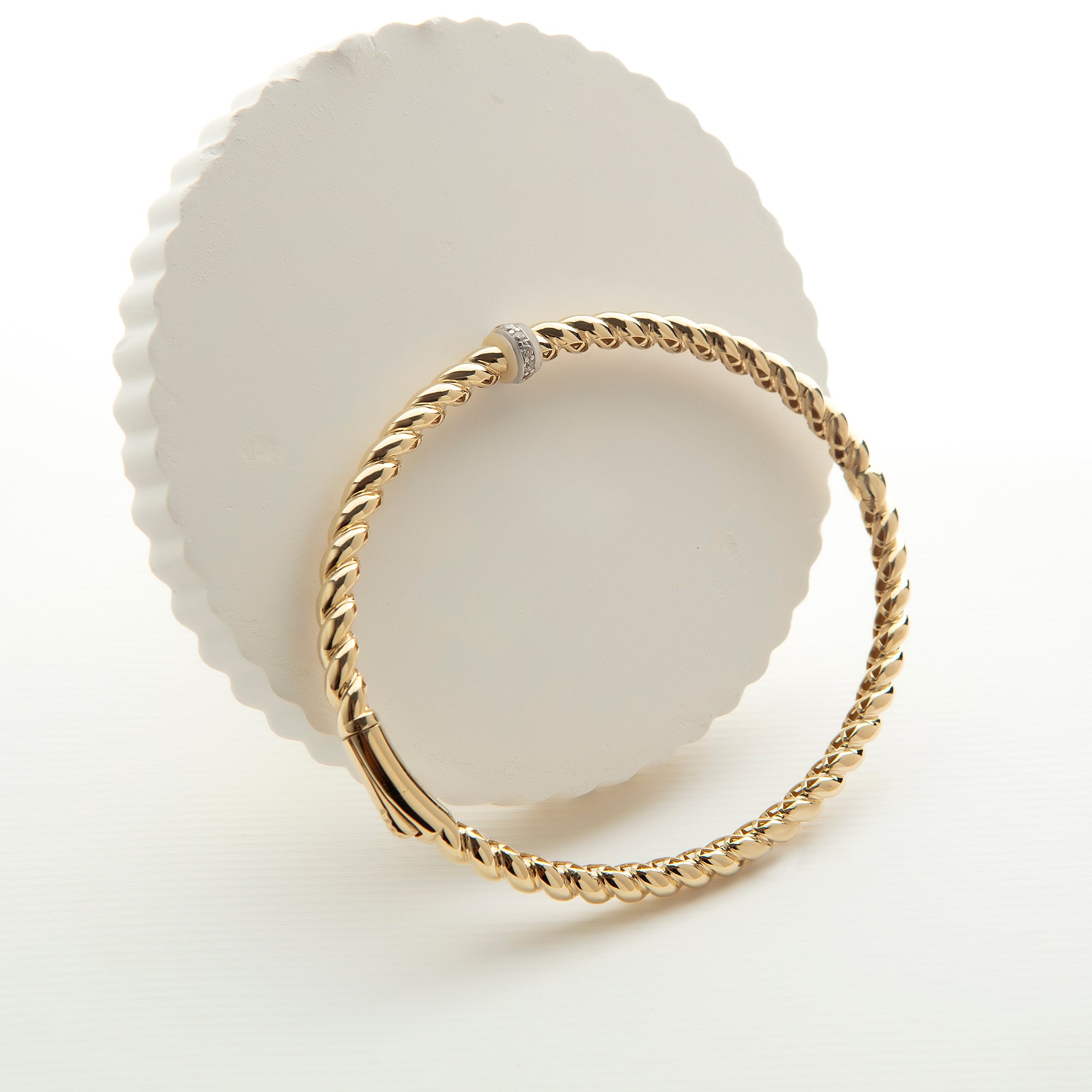
A single row of pavé that traces a bar, an edge or a curve. It reads as a clean line of light — modern and easy to stack. Examples: the Pavé Bar Bangle, Pavé Bar Huggies and the Pavé Edge Signet Ring.
Half pavé
Stones cover part of the piece, usually the front, while the back stays smooth gold. You see sparkle where it matters, and the piece is more comfortable against the skin. Example: the Half Pavé Crossover Bangle.
Full pavé and eternity

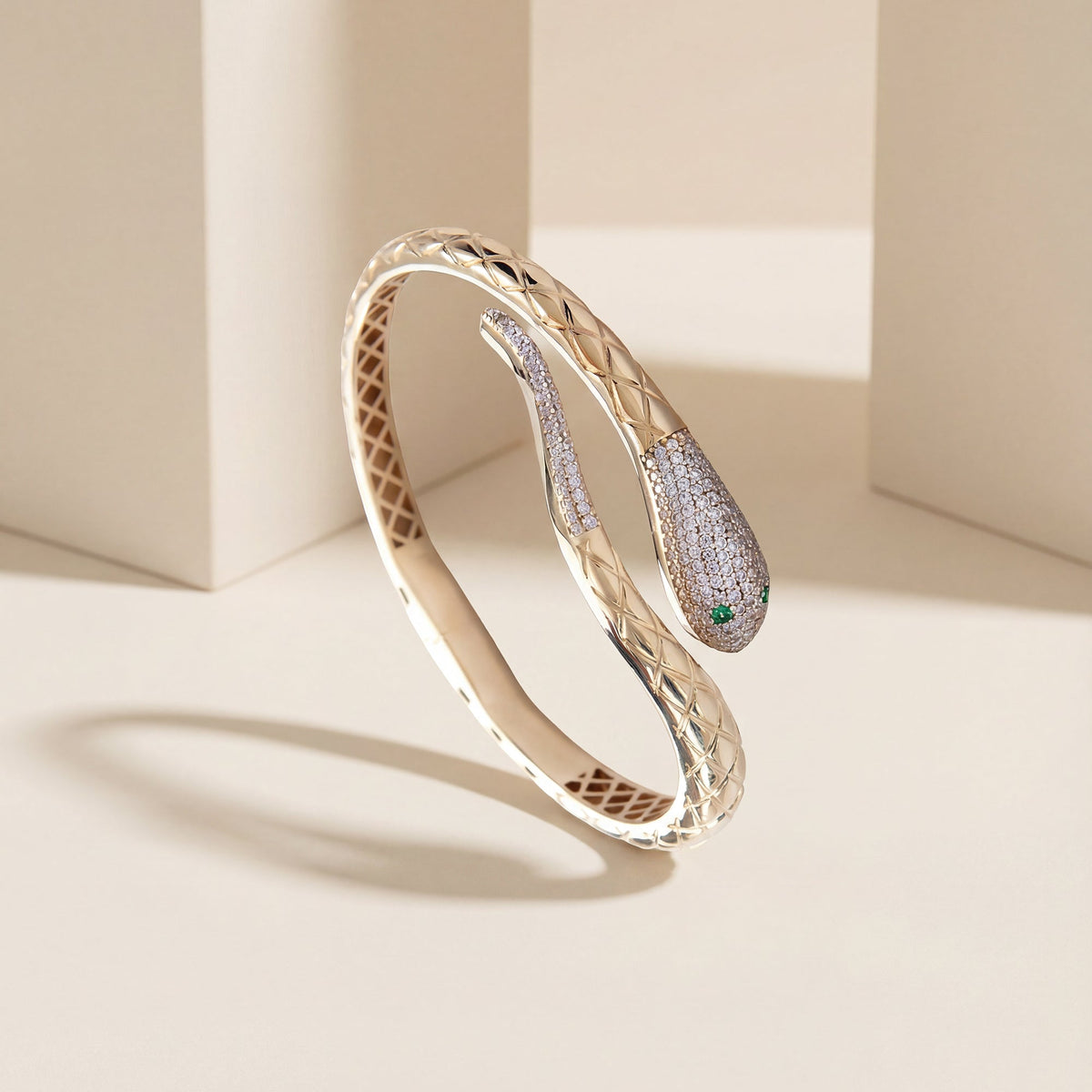
Pavé that runs all the way around — sparkle from every angle. It's the most glamorous style and makes a natural statement or milestone piece. Examples: the Pavé Eternity Bangle and the Pavé Snake Bangle.
Pavé earrings

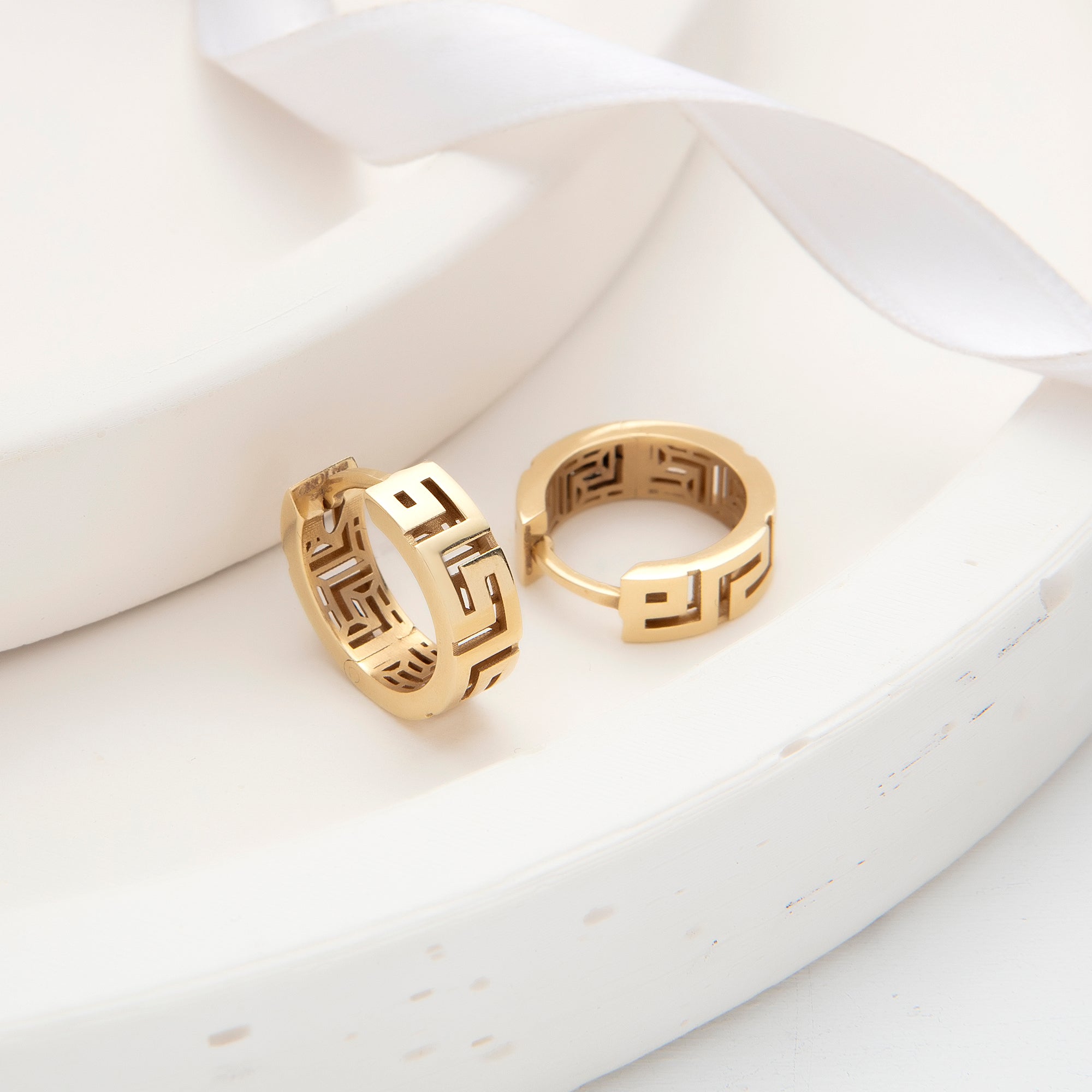
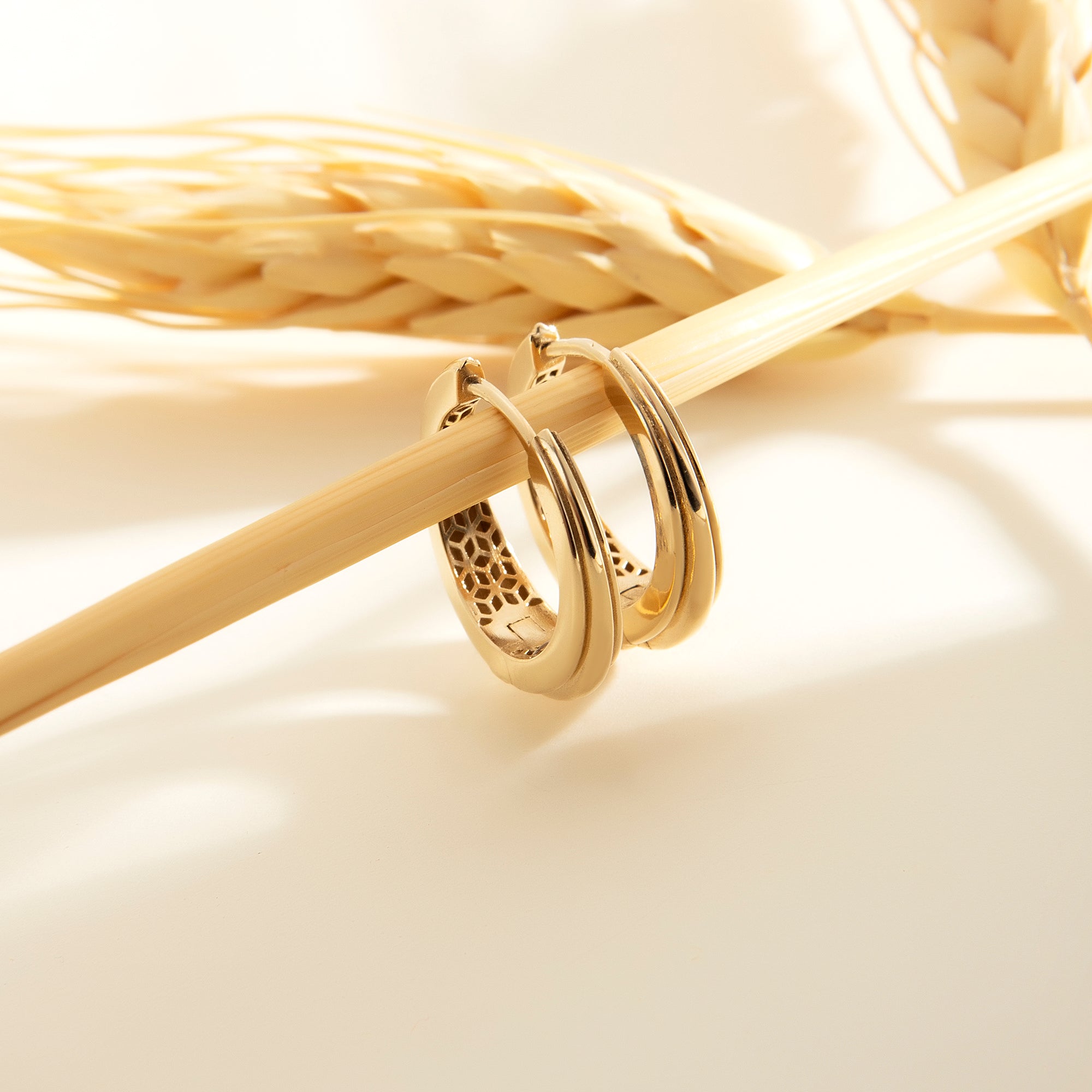
Earrings are the easiest place to start with pavé: they sit near the face and catch light every time you move. Try the everyday Pavé Huggie Hoops, the geometric Pavé Octagon Hoops, or the sculptural Pavé U-Shape Hoops.
Pavé vs. other stone settings
- Pavé: many small stones set close together. Maximum sparkle across a surface.
- Prong or solitaire: one larger stone held up by claws. The focus is a single stone.
- Bezel: a rim of metal wraps around the edge of a stone. Very secure, sleek and modern.
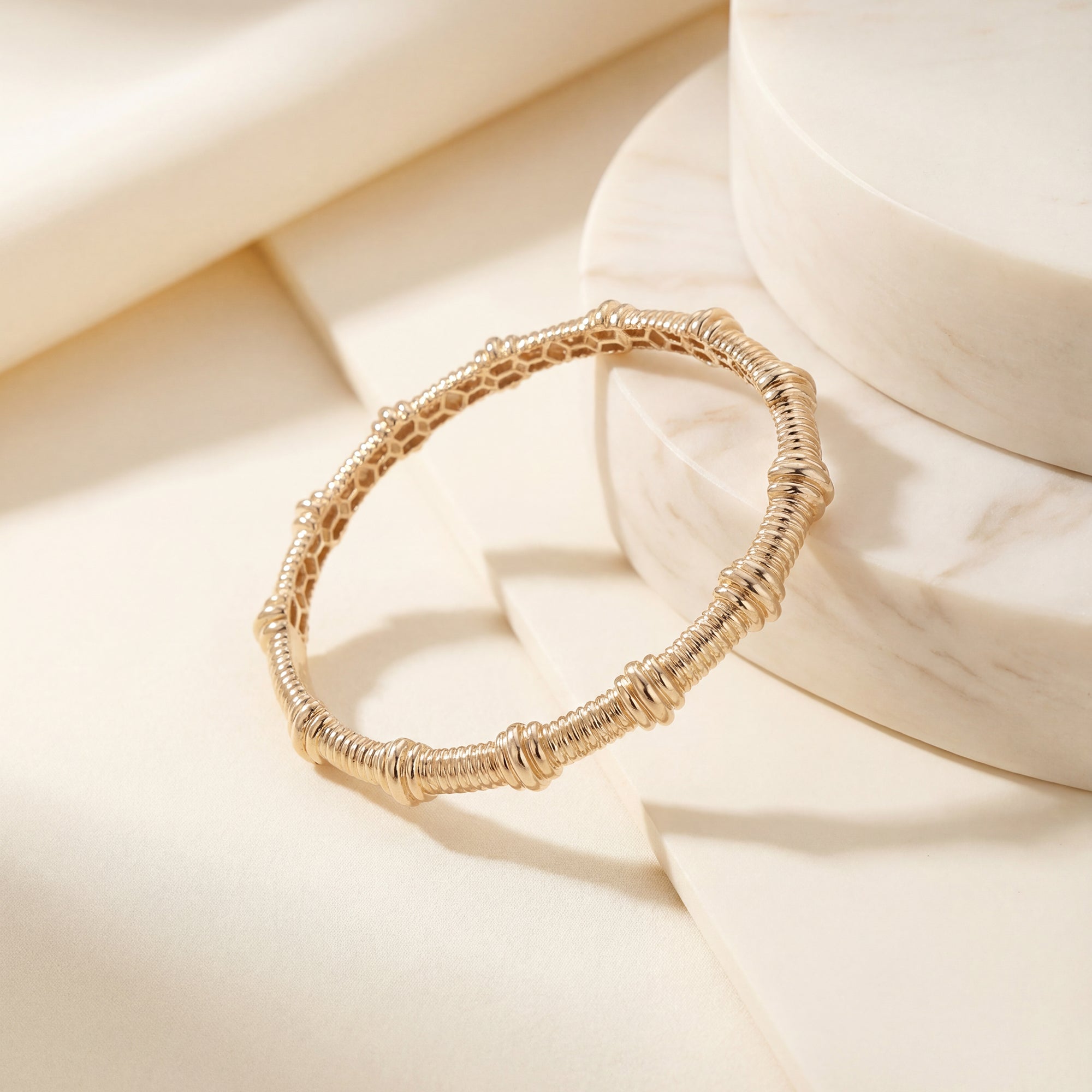
- Station: individual stones spaced out along a piece, with gold between them — like the CZ Station Bangle.
Cubic zirconia vs. diamond: an honest comparison
Pavé can be done with any stone. At Kavseyn, all of our pavé and stone-set styles use cubic zirconia (CZ) unless a listing states otherwise. Here's how CZ compares with diamond:
- What it is: cubic zirconia is a lab-made crystal. It is not a diamond and is not sold as one.
- Look: CZ is colorless and very bright. In small pavé stones, most people can't tell the difference at a glance.
- Hardness: diamond is the hardest natural material (10 on the Mohs scale); CZ is around 8–8.5. That's hard enough for everyday wear, but CZ can show fine scratches over many years.
- Price: CZ costs a small fraction of diamond. That's what lets us set sparkle on solid gold at a much friendlier price.
- Clarity over time: CZ itself doesn't fade, but lotion, soap and skin oils can build up behind the stones and dull the sparkle. Regular gentle cleaning brings it back.
The way we see it: the gold is the part that lasts a lifetime and holds its value, so we never compromise on it — it's always solid 14K or 18K. The stones are there for the sparkle.
Is pavé jewelry durable enough for every day?
Yes — with a little care. Because pavé stones are small and sit low in the metal, they're well protected. A few tips:
- Choose 14K gold for pavé rings and bangles you'll wear daily — it's harder than 18K and holds settings well.
- Take rings off for heavy lifting, gardening or sports, where a hard knock can loosen a stone.
- Pavé on earrings and pendant-style pieces gets the least wear; pavé on the palm side of a ring gets the most.
Every Kavseyn piece carries a lifetime warranty against manufacturing defects, including a stone that works loose from its setting. See our Returns & Refunds page for details.
How to clean and care for pavé
- Soak the piece for a few minutes in warm water with a drop of mild dish soap.
- Brush gently behind the stones with a very soft toothbrush to lift away lotion and oil.
- Rinse in clean water and pat dry with a soft, lint-free cloth.
- Avoid harsh chemicals, chlorine and home ultrasonic cleaners, which can loosen small stones.
- Store each piece separately so stones don't scratch other jewelry.
Put your jewelry on after lotion, perfume and hairspray, and take it off before showering or swimming. More tips in our Care & Sizing Guide.
How to style pavé
- One sparkle, lots of gold: pair one pavé piece with polished gold. A pavé bangle between two plain bangles looks intentional, not busy.
- Repeat the shape: match a Pavé Bar Ring with the Pavé Bar Bangle for a quiet, coordinated set.
- Day to night: pavé huggies work at the office and at dinner — no outfit change required.
Pavé jewelry FAQ
Is pavé jewelry real gold?
At Kavseyn, yes: every pavé piece is solid 14K or 18K gold, never plated. The stones are cubic zirconia unless stated otherwise.
Does cubic zirconia turn cloudy?
The stone itself doesn't change, but residue from skin and products can make it look cloudy. A gentle clean with warm soapy water restores the sparkle.
Can pavé rings be resized?
Pavé that runs all the way around a band is hard to resize, so it's worth getting the size right first. Use our Ring Size Guide, or email info@kavseyn.com before ordering.
How long does delivery take?
Every pavé piece is made to order in 1–3 business days and delivered in 1–3 business days with free insured U.S. shipping. Orders ship from CA, and returns and exchanges are accepted within 30 days of delivery.
Shop all solid gold pavé jewelry →
All stones described as pavé or CZ are cubic zirconia, not diamond.